What is a Bumblebee Hummingbird Moth?
The Bumblebee Hummingbird Moth is an insect that closely resembles a hummingbird, both in appearance and behavior. These fascinating creatures are often mistaken for hummingbirds because of their size, shape, and the way they hover in place while feeding.
They belong to the sphingid family of moths, also known as hawk moths, and are known for their remarkable ability to hover while feeding on nectar, much like hummingbirds do.
The Bumblebee Hummingbird Moth: A Unique Species
In regions like California, Colorado, and Texas, one of the most common types of hummingbird moths is the bumblebee hummingbird moth. These moths have the same hovering flight style as hummingbirds, using their proboscis (a long feeding tube) to extract nectar from flowers.
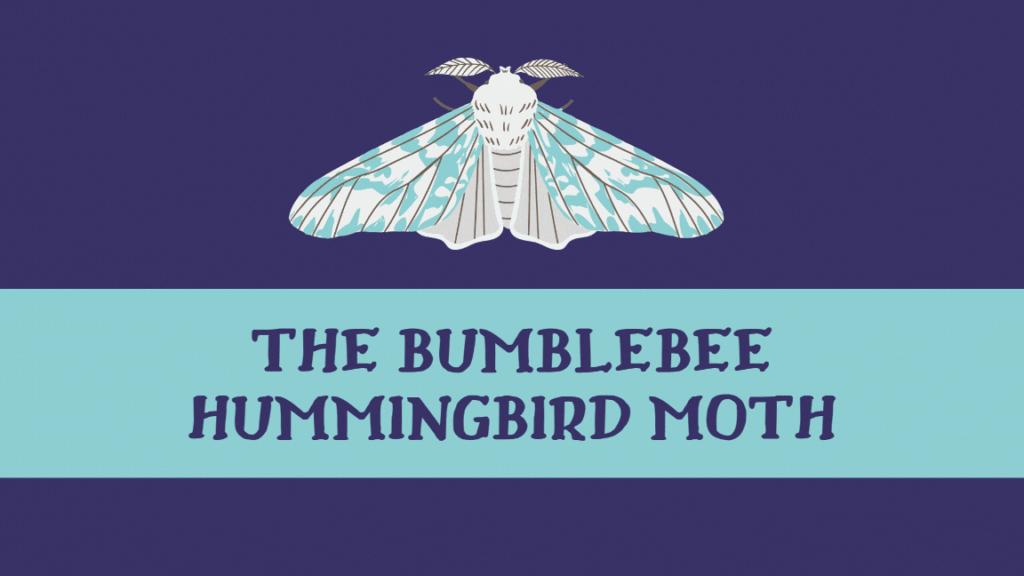
Key Features of the Bumblebee Hummingbird Moth
- Appearance: The bumblebee hummingbird moth has a distinctive look with yellow and black coloring similar to a bumblebee, yet it shares the hovering flight abilities of a hummingbird.
- Flight: These moths have rapid, hovering flight patterns. They can remain in one spot, feeding on nectar from flowers, just like a hummingbird does.
- Feeding: They primarily feed on nectar from various flowering plants and shrubs, playing an important role in pollination.
Where Can You Find Bumblebee Hummingbird Moths?
The bumblebee hummingbird moth is found in a variety of habitats in places like California, Colorado, and Texas. These regions offer a diverse range of plants and flowers that provide ample nectar, making them ideal environments for the moths.
Read more: Where Can You Find Bumblebee Hummingbird Moths
The bumblebee hummingbird moth is a remarkable insect that blends the characteristics of both a hummingbird and a bumblebee, making it a fascinating creature to observe. With their unique hovering abilities and vibrant appearance, these moths contribute to pollination in many parts of the United States, especially in the western and southern regions.
What is a Bumblebee Hummingbird Moth?
The bumblebee hummingbird moth, also known as the sphinx moth, is often mistaken for a hummingbird due to its similar flight patterns and behavior. These moths are common in North American regions, including California, Colorado, and Texas.
Their hovering ability and nectar-feeding habits resemble those of hummingbirds, earning them the nickname “hummingbird moth.”
Sphinx Moths: Other Names and Identification
Sphinx moths are frequently referred to by several other names, including hawk moths and hummingbird hawk moths. Their wings are streamlined, which allows them to fly quickly and with great agility, much like a hummingbird.
The name “sphinx” comes from their appearance, which resembles the mythical Sphinx statues of ancient Egypt, due to their posture when they hover and feed.
Other common types of hummingbird moths include the snowberry clearwing moth, narrow clearwing moth, and white-lined sphinx moth. These species share the same general appearance and behavior, making them difficult to differentiate from one another at first glance.
Physical Appearance of the Hummingbird Moth
The bumblebee hummingbird moth has distinct features that set it apart from other flying insects:
- Size & Body: It has a robust, bumblebee-like body, which gives it its “bumblebee” nickname.
- Antennae: The moth’s antennae are thick and typically blunt, with a wide upper side.
- Wings: Their wings often feature clear spots, especially noticeable in species like the snowberry clearwing. These wings become more visible once the moth emerges from its cocoon.
- Flight Pattern: These moths have the ability to hover in mid-air while feeding on nectar, a trait they share with hummingbirds.
Read more: Physical Appearance of the Hummingbird Moth
Habitat and Behavior
Hummingbird moths are commonly found in open fields, gardens, and meadows in places like California, Colorado, and Texas. They feed primarily on nectar from flowers, using their long proboscis to extract the sweet liquid. Like hummingbirds, they hover in place, making them easy to spot during the warmer months.
The bumblebee hummingbird moth is a remarkable creature that shares many traits with hummingbirds, including its flight style and feeding habits. While these moths may be difficult to differentiate from their avian counterparts, their role as pollinators is invaluable in ecosystems across North America.
Whether you’re in California, Colorado, or Texas, these fascinating insects are an important part of the local wildlife.
Hummingbird Moth Caterpillar: Appearance and Features
The hummingbird moth caterpillar grows to about the size of a pinky finger and has a smooth, cylindrical body. One of its most distinct features is the pointed horn at the end of its tail, which makes it stand out from other caterpillars. When fully mature, these caterpillars can be easily identified by this unique horn-like structure.
Hummingbird Moths: Not Birds, But Fascinating Insects
At first glance, hummingbird moths might appear similar to hummingbirds due to their hovering flight and behavior. However, these moths are actually insects, not birds. They are much smaller than hummingbirds, usually measuring only 1 to 2 inches in length, making them easy to distinguish by their size.
While they mimic the appearance and movements of hummingbirds, they belong to the moth family, specifically the sphinx moth group.
Are Hummingbird Moths Rare?
While some species of hummingbird moths, like the narrow clearwing, are rarer in certain areas, the more common varieties, such as the snowberry clearwing and hummingbird clearwing, are frequently seen in gardens and flower beds.
These moths are not considered rare and can be spotted in many parts of North America, including California, Colorado, and Texas.
Attracting Hummingbird Moths to Your Garden
To attract these fascinating moths to your garden, plant nectar-rich flowers such as phlox, bee balm, and other pollinator-friendly species. Hummingbird moths are particularly drawn to tube-shaped flowers with nectar deep in the petals, such as nasturtiums, columbines, and four-o’clocks.
Also reed: meaning-and-symbolism-of-the-hancock-birdThese moths will hover and feed on the nectar, much like hummingbirds, making them a delightful addition to any garden.
The bumblebee hummingbird moth, often mistaken for a hummingbird due to its size and feeding habits, is a remarkable and common insect in areas like California, Colorado, and Texas.
Whether you’re observing the caterpillars or watching them hover over flowers, these moths play an important role in pollination and are a unique feature of North America’s insect population.
Understanding Hummingbird Moths: A Fascinating Insect in North America
The hummingbird moth, often mistaken for a hummingbird, is a remarkable insect found in regions like California, Colorado, and Texas. Despite their name, these moths are not birds, but members of the Lepidoptera order, and they share several traits with hummingbirds, including hovering while feeding and producing a distinct hum.
Hummingbird Moths and Their Appearance
Hummingbird moths are typically plump with wings covered in fine scales, characteristic of all moths. Their reddish-brown coloration, especially on their bodies, makes them stand out. Some species of clearwing hummingbird moths lose many of their wing scales, creating a transparent look that is where the “clearwing” name comes from.
These moths have long tongues (proboscises) that they curl under their chin when not in use. These specialized feeding structures allow them to access nectar from long-tubed flowers, such as those found in plants like honeysuckle, dogbane, and some members of the rose family (e.g., hawthorn, plum, and cherry).
Hummingbird Moths vs. Hummingbirds: Key Differences
While hummingbird moths and hummingbirds share similar feeding behaviors, there are a few distinctions between them. One of the key differences is that hummingbird moths are insects, not birds.
Also reed: hummingbird-feeder-maintenance-in-winterThey typically measure around 1 to 2 inches in length, whereas hummingbirds are larger. Additionally, hummingbird moths are often seen in gardens feeding on flowers like bee balm and phlox, where they can hover with the same grace and agility as hummingbirds.
How Hummingbird Moths Feed
Hummingbird moths are day-flying insects, attracted to a wide range of flowers, especially those that are fragrant and have long nectar tubes. Unlike other insects that may struggle to reach deep flower nectar, these moths are perfectly equipped to feed on tube-shaped flowers.
Their ability to hover and feed in this way is another reason they are often confused with hummingbirds.
Habitat and Behavior in North America
In North America, particularly in areas like California, Colorado, and Texas, hummingbird moths are commonly seen during the spring and summer months. They thrive in flower-rich gardens and meadows, where they help with pollination while feeding on nectar.
These moths are a delight to watch, as they can be seen hovering in mid-air, just like a hummingbird, sipping nectar from flowers with their long proboscis.
Attracting Hummingbird Moths to Your Garden
To attract hummingbird moths to your garden, consider planting a variety of nectar-rich flowers, such as bee balm, phlox, and columbines. These moths are particularly drawn to night-blooming flowers and fragrant plants that emit a strong scent.
If you create a moon garden with flowers that bloom in the evening, you may be able to observe these fascinating insects feeding under the moonlight.
The hummingbird moth is an incredible and often misunderstood insect that shares several fascinating traits with hummingbirds, including its feeding habits and ability to hover in mid-air. Found in regions like California, Colorado, and Texas, these moths are important pollinators and a joy to watch in any garden.
Whether you encounter them feeding on your flowers or see their distinctive clearwing species, hummingbird moths are a unique addition to the natural world.
Bumblebee Hummingbird Moth: A Summer Visitor to California, Colorado, and Texas
The bumblebee hummingbird moth, often spotted in regions like California, Colorado, and Texas, is an intriguing insect that shares many characteristics with hummingbirds, especially in its feeding habits.
These moths are commonly seen in gardens where plants like bee balm, phlox, honeysuckle, and verbena are in full bloom, especially during the summer months. Their vibrant activity and unique behaviors make them a fascinating presence in pollinator-rich environments.
Habitat and Feeding Preferences
These moths are most active in gardens and natural landscapes where flowers like bee balm (Monarda), phlox (Phlox), honeysuckle (Lonicera), and verbena (Verbena) attract pollinators. The long-tubed flowers of these plants provide ideal nectar sources for the hummingbird moths, allowing them to hover in place while feeding, much like a hummingbird.
This behavior makes them a joy to observe as they flit from flower to flower.
Reproductive Behavior and Lifecycle
Hummingbird moths have a fascinating mating process. The females release a scent known as pheromones from glands located at the tip of their abdomen. These pheromones attract males, signaling that it’s time for mating.
After mating, the females lay their small, round, green eggs on the underside of leaves, typically on plants that will serve as food for the larvae once they hatch.
Caterpillar Development and Camouflage
The caterpillars of the hummingbird moth are green with a distinctive horn on their rear end, which helps them blend in with the leaves of their host plants. This camouflage protects them from predators. As they mature, the caterpillars drop to the ground and spin a loose cocoon in which they pupate.
The cocoon is often hidden among leaf litter, offering further protection.
Lifecycle and Generations
The number of generations produced by hummingbird moths depends largely on the climate. In colder northern regions, where the growing season is shorter, the moths typically produce just one generation per year.
The pupae overwinter in the ground and emerge the following spring. In contrast, in warmer southern climates, multiple generations of these moths can emerge over the course of a single summer, allowing for a more frequent cycle of reproduction and maturation.
Conclusion
The bumblebee hummingbird moth is a unique and important pollinator, especially in regions like California, Colorado, and Texas. Its behavior, which closely resembles that of a hummingbird, along with its distinctive life cycle and feeding habits, makes it a fascinating subject for garden enthusiasts and nature lovers alike.
By planting the right flowers, such as bee balm, phlox, and honeysuckle, you can attract these wonderful moths to your garden and enjoy their mesmerizing activity throughout the warmer months.
About the Author
