American Goldfinch Birds – Characteristics, Habitat, and Behavior
The American goldfinch is a small, vibrant bird known for its striking colors and energetic nature. Below are its key measurements:
- Length: 4.3-5.1 inches (11-13 cm)
- Weight: 0.4-0.7 oz (11-20 g)
- Wingspan: 7.5-8.7 inches (19-22 cm)
Color Variations Across Seasons
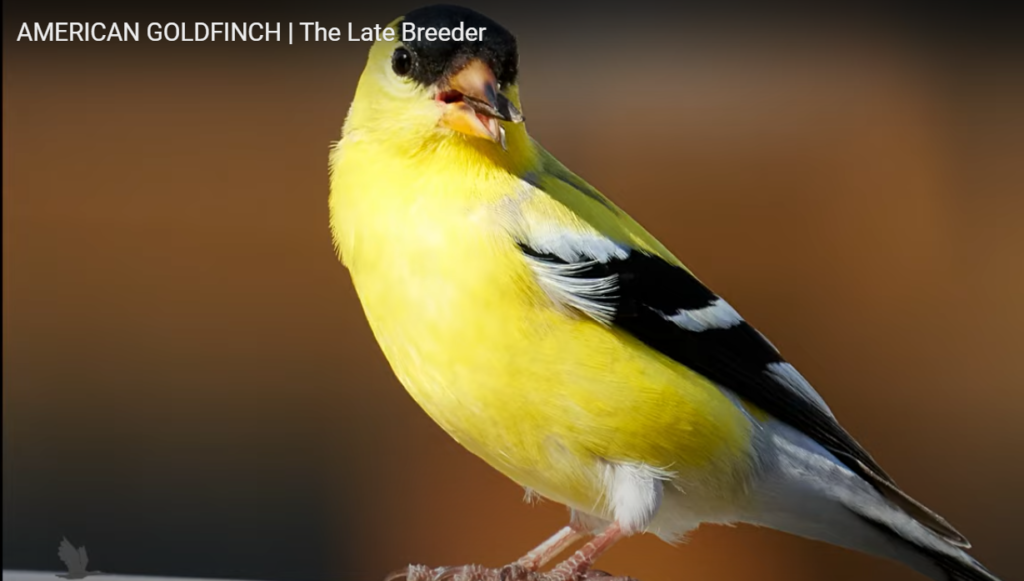
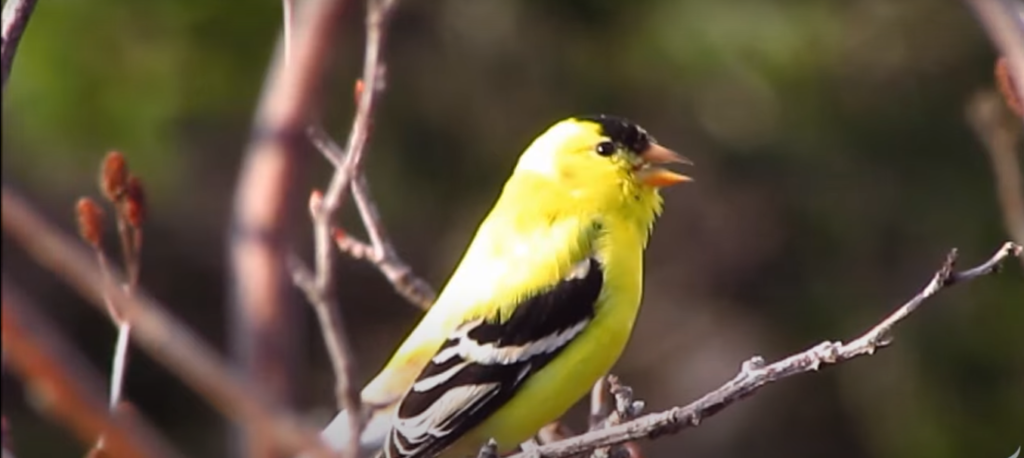
- Males (Spring & Summer): Bright yellow body, black forehead, black wings with white markings, and white tail spots.
- Females (Spring & Summer): Paler yellow underparts with olive-green upperparts.
- Winter Appearance (Both Sexes): Dull brownish shade with black wings and two pale wing bars.
Behavior and Movement Patterns
- These birds are highly active and acrobatic, often clinging to weeds and seed feeders.
- They are social birds that may gather in flocks at feeding stations or on the ground.
- Their flight pattern is bouncy and undulating, making them easily recognizable.
- American goldfinches frequently call while flying, which helps in their identification.
Read more: Behavior and Movement Patterns
Preferred Habitat
The American goldfinch thrives in open fields and semi-wooded areas, particularly in places with sunflowers, thistles, and asters. Other common habitats include:
- Weedy fields and floodplains
- Roadsides and cultivated farmlands
- Orchards and suburban gardens
- Construction sites with overgrown vegetation
They are year-round visitors to bird feeders, with the highest activity observed during winter months.
Nesting Habits of the American Goldfinch
Nest Selection Process
- The male and female work together to find a suitable nesting site.
- The female builds the nest in an open environment, usually in a bush or young tree.
- The nest is typically placed high in a bush, where branches meet, often shaded by leaves or pine needles but still visible from below.
Nest Structure and Materials
- The nest is an open cup-shaped structure, tightly woven to retain water.
- Built from plant roots, fibers, and silk, it is reinforced with pappus, a soft material from the same flowers the goldfinches feed on.
- The female takes approximately six days to construct the nest, which measures about 3 inches in diameter and up to 4.5 inches in height.
American Goldfinch Birds – Characteristics, Nesting, and Conservation
Nesting and Reproduction
The American goldfinch follows a unique breeding cycle, usually nesting in mid-to-late summer when food sources are abundant. Below are key details about their nesting habits:
- Clutch Size: 2 to 7 eggs
- Broods per Year: 1 to 2
- Egg Size:
- Length: 1.62 to 1.69 cm (0.6 to 0.7 in)
- Width: 1.22 to 1.28 cm (0.5 to 0.5 in)
- Incubation Period: 12 to 14 days
- Nestling Period: 11 to 17 days
- Egg Appearance: Pale bluish-white, sometimes with light brown spots near the larger end.
- Hatchling Condition: Weak at birth, with sparse gray down feathers.
Also read: Nesting and Reproduction
Behavior and Feeding Habits
- American goldfinches are agile and acrobatic, often seen balancing on flower heads and seed pods while feeding.
- They mainly consume seeds from thistles, dandelions, and sunflowers.
- Unlike many songbirds, goldfinches do not participate in mobbing predators to defend their nests.
- Their flight is bouncy and undulating, accompanied by soft chip calls.
- Males sing actively in the spring, but nesting begins mid-summer, coinciding with the maturity of seed-producing plants.
Conservation Status
The American goldfinch is a common species, but its population has experienced a slight decline.
- According to the North American Breeding Bird Survey, their population has decreased by 0.6% annually since 1966, leading to a 27% total decline.
- The Partners in Flight organization estimates a global breeding population of 44 million.
- The species has a Continental Concern Score of 6 out of 20, indicating a low conservation concern at present.
FAQ’s:
1. When do American goldfinches typically nest?
Answer: Unlike many other songbirds, American goldfinches begin nesting in mid-to-late summer rather than spring. They wait for thistles and other seed-producing plants to mature, ensuring a steady food supply for their young.
2. What do American goldfinches eat?
Answer: Their diet mainly consists of seeds from thistles, dandelions, sunflowers, and other plants. They are strictly vegetarian, unlike many other songbirds that also consume insects.
3. How can you identify an American goldfinch?
Answer: During spring and summer, male goldfinches have a bright yellow body, black wings with white markings, and a distinctive black forehead. Females are duller in color, with olive tones on their upper body and lighter yellow underneath. In winter, both sexes take on a brownish appearance.
4. Are American goldfinches at risk of extinction?
Answer: No, American goldfinches are not considered endangered. However, their population has declined by 0.6% annually since 1966, totaling a 27% decline. Despite this, they are still classified as a species of low conservation concern.
About the Author
